
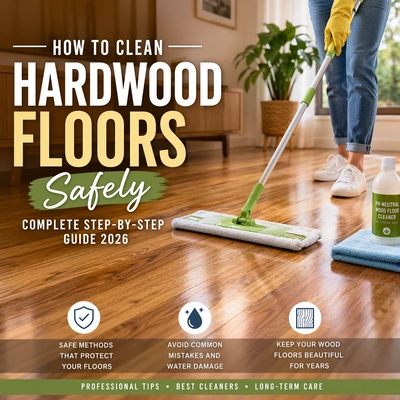
To clean hardwood floors safely, first remove dust with a microfiber mop or vacuum, then use a lightly damp mop with a pH-neutral cleaner. Avoid excess water, steam cleaning, and acidic chemicals to prevent permanent damage to the wood surface and finish.

1. Why Proper Hardwood Floor Cleaning Matters
Hardwood flooring is widely used in residential, commercial, and hospitality spaces due to its durability and natural appearance. However, wood is a hygroscopic material, meaning it absorbs and releases moisture depending on environmental conditions.
Incorrect cleaning methods can cause:
- Surface dullness and loss of gloss
- Micro-scratches from dust and sand particles
- Warping due to moisture absorption
- Finish degradation (polyurethane or oil coating damage)
- Long-term structural instability in severe cases
This is why professional maintenance focuses on low moisture + neutral chemistry + non-abrasive tools.

2. Types of Hardwood Floors (Important for Cleaning Method)
2.1 Solid Hardwood
Made from a single piece of wood. Highly sensitive to moisture and temperature changes. Requires strict dry/damp cleaning control.
2.2 Engineered Wood Flooring
Multi-layer structure with a hardwood surface layer. More stable, but still vulnerable to water penetration at seams.
2.3 Surface-Finished vs Oil-Finished Floors
- Surface-finished (polyurethane): more water-resistant, easier to clean
- Oil-finished: requires specialized cleaning products, no harsh detergents

3. Professional Cleaning Method (Step-by-Step)
Step 1 — Dry Cleaning (Critical Foundation)
- Use microfiber dust mop
- Or vacuum with hardwood-safe head
This step removes abrasive particles that can permanently scratch the surface.

Step 2 — Select Proper Cleaning Solution
Only use pH-neutral hardwood floor cleaners.
Recommended product:
Hardwood Floor Cleaner
Avoid:
- Vinegar (acid erosion)
- Ammonia (finish breakdown)
- Bleach (chemical damage)

Step 3 — Controlled Damp Mopping
- Lightly damp mop only
- Follow wood grain direction
- No standing water allowed
Professional rule: if water is visible on the surface, it is already too much.

Step 4 — Drying Process
Immediately remove residual moisture using a dry microfiber cloth. Pay attention to:
- Floor seams
- Edges near walls
- High-traffic zones

4. Deep Cleaning vs Regular Cleaning
| Type | Frequency | Method |
| Daily cleaning | Every day | Dust removal |
| Routine cleaning | Weekly | Damp mop with neutral cleaner |
| Deep cleaning | Monthly | Full surface cleaning + inspection |
| Refinishing | 1–5 years | Professional resurfacing |
5. Common Mistakes That Damage Hardwood Floors
- Using steam mops (heat + moisture damage)
- Over-wetting during cleaning
- Using acidic or alkaline cleaners
- Dragging heavy furniture without pads
- Ignoring dust buildup (causes micro-scratches)
6. Professional Maintenance Tips
- Maintain indoor humidity between 30%–50%
- Use entrance mats to reduce sand and dust
- Add furniture felt pads to reduce friction
- Clean spills immediately
- Avoid direct sunlight exposure for long periods

7. Cleaning Tools Checklist
- Microfiber mop
- Soft-bristle vacuum attachment
- pH-neutral wood cleaner
- Dry microfiber cloth
- Furniture pads
8. Commercial & Project Use Perspective
In commercial environments such as hotels, offices, and residential projects, hardwood flooring maintenance is directly linked to lifecycle cost and customer perception.
Poor maintenance leads to:
- Early refurbishment costs
- Reduced aesthetic value
- Lower property resale value

9. Internal Resources
10. FAQ
Can I use vinegar to clean hardwood floors?
No. Vinegar is acidic and damages protective coatings over time.
Can I use steam mop on hardwood floors?
No. Steam causes moisture penetration and structural damage.
What is the safest cleaner?
pH-neutral cleaners like Bona are recommended.
How often should hardwood floors be cleaned?
Dust daily and damp clean weekly for optimal maintenance.
Conclusion
Proper hardwood floor cleaning is not just about appearance—it directly affects durability, structural stability, and long-term cost. Using correct methods ensures the floor maintains its performance and visual quality for years.
Need B2B wood flooring or door solutions for your project?